Commercial Roof Inspection in Houston: What Gets Checked
A commercial roof inspection in Houston checks the membrane, seams, flashing, drains and ponding, documented in a report you use for budgets and claims.
You are responsible for the roof of an office, a retail center or a warehouse in Houston, and you cannot tell from the ground whether the roof is fine or two rains away from a leak over a tenant.
The report a roofer hands you is only useful if you know what went into it. Here is what a qualified inspection of a flat or low-slope roof covers, what the written record does for you later, and the signals that mean you should not wait for the next visit.
Quick answer: A commercial roof inspection in Houston covers the surface membrane condition, seam integrity, flashing at all penetrations and edges, drain function, ponding zones, and the curbs where rooftop HVAC units sit. The inspector documents each with photos and a written condition report, which supports both your maintenance budget and a future insurance claim. Not every problem found needs a replacement; many flat roofs need a targeted repair.
What a commercial roof inspection covers
A commercial roof inspection documents current conditions, identifies problems, and estimates how much service life is left. On a flat or low-slope roof, the inspector is not glancing for missing shingles the way they would on a house. They are checking a handful of specific zones where these roofs actually fail.
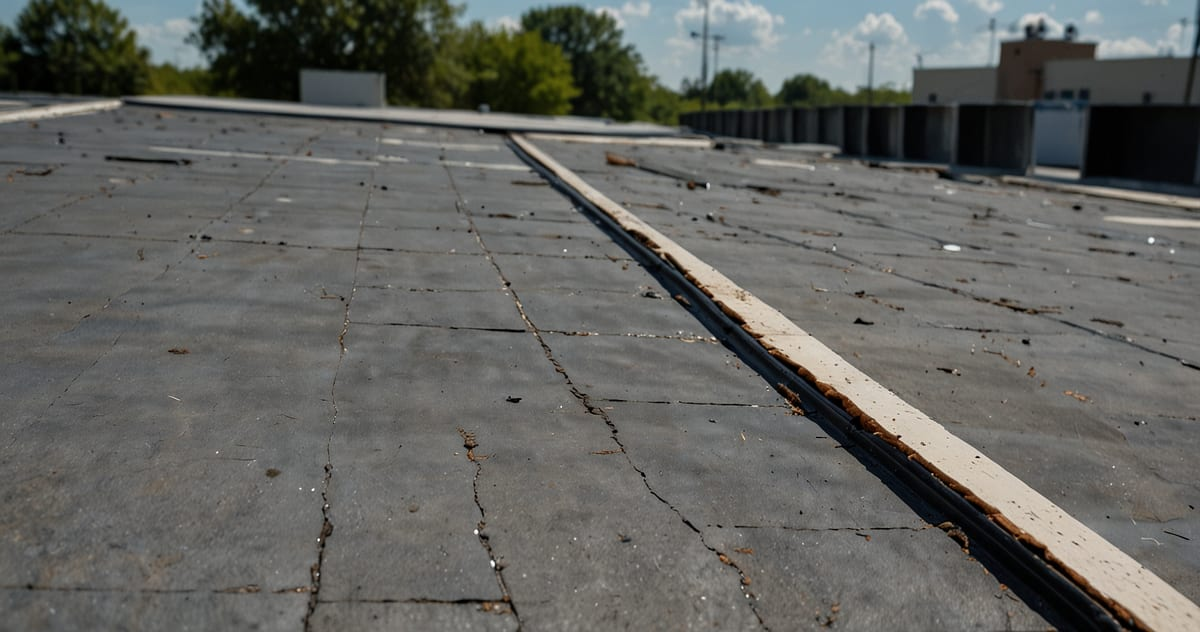
The membrane is the top waterproof layer, usually TPO, modified bitumen, built-up, or a single-ply like DuroLast. The inspector looks for cracking, blistering, where the surface is thinning, and any punctures. Then the seams, the lines where two sheets of membrane join. A seam that has lifted at one edge, sometimes called a fish-mouth because it gapes open, lets water track underneath where you will not see it until it shows up on a ceiling tile.
Penetrations are everywhere a pipe, vent, conduit or drain comes through the roof, and each one is sealed with flashing. Flashing is the metal or membrane detail that bridges the gap between the roof surface and whatever sticks up through it. The inspector checks every penetration, every wall and parapet edge, and the curbs under rooftop HVAC units, which is the raised frame the unit sits on. HVAC curb flashing takes constant abuse from foot traffic during service calls and from the unit’s own vibration, and it is one of the most common leak sources on a commercial roof.
Drainage is its own check. On a flat roof, water is supposed to move to drains, scuppers or internal leaders and leave. The inspector tests whether the drains are clear and whether the roof actually slopes to them, then marks the ponding zones, the low spots where water sits after rain. In Houston that matters more than almost anywhere, which is the next section.
If the roof has repeated leaks or the inspector suspects the insulation under the membrane is already wet, the inspection may include moisture testing or an infrared scan to map the wet areas before anyone decides on a repair.
Why ponding and seams matter more on a Gulf Coast roof
Houston punishes a missed inspection faster than a dry climate does. Standing water on a flat roof speeds up how fast the membrane breaks down, and a small puncture or open seam left alone grows into a major leak. Our heat, humidity, and the rain volume a tropical system drops in a few hours all push harder on the exact details an inspection checks.
A low spot that holds water for a day after a normal rain is a different problem here than it is in a dry climate, because the next storm refills it before it ever dries. Water sitting on a seam works into any small gap and freezes almost never but bakes often, and the daily heat cycle expands and contracts the membrane until a weak seam gives.
This is also why so many Houston commercial roofs that look like they need replacing do not. A roof can be ponding in two corners and leaking at one HVAC curb and still have years of service left everywhere else. The honest outcome of an inspection is often a targeted repair. Not every roofing problem requires a full replacement. Our commercial roofing work covers repair, maintenance and replacement, and we tell you which one the roof actually needs after we look at it.
What the report documents, and why it matters for budgets and claims
The written report is the part you keep. A commercial inspection report typically includes dated photos, a written condition assessment, repair recommendations, maintenance planning notes, and in some cases a replacement budget figure. Each of those does a job for you after the roofer leaves.
For a capital budget, the report is your defense. When you go to ownership asking for roof money, a dated photo of a lifting seam with a note on remaining service life is a stronger case than "the roof looks old." It lets you separate what needs money this year from what can wait, and it gives you a number to put in the budget instead of a guess.
For insurance, the documentation is what connects damage to a storm. After a hurricane or a hail event, the question is always whether the damage is new and storm-caused or old wear. A dated report from before the storm, paired with a dated post-storm inspection, shows the difference. Mars Roofing inspects storm damage, documents what it finds, and helps you understand the roofing portion of the claim. Your insurance company makes the coverage decision, and no inspection changes that.
When the inspection is part of a property sale, it often follows ASTM E2018, a standard that sets how commercial properties are evaluated so the condition statement means the same thing to a buyer, a lender and a seller. A pre-sale or pre-refinance inspection is more formal than a routine maintenance visit and produces a condition statement the lender will accept.
How often to inspect, and when to call outside the schedule
Inspect on a schedule, and add an unscheduled inspection whenever one of four things happens. The National Roofing Contractors Association recommends a minimum of two professional commercial inspections a year, usually spring and fall. Spring catches winter wear before storm season; fall catches storm-season wear before winter rain.
On the Gulf Coast, twice a year is the minimum. The spring and fall visits are the routine. Between them, four signals mean you call for a look before the next scheduled visit:
- After a major storm. The NRCA recommends an additional inspection after any significant weather event, including a hurricane, beyond the twice-yearly baseline. Wind can lift a seam or shift flashing with no debris left on the ground to warn you.
- Ponding that stays after the roof should be dry. If a low spot still holds water a day or two after the rain stops, the drainage is failing or the slope has changed, and the membrane under that water is aging faster than the rest.
- A tenant drip call. One drip over a leased space means water is already past the membrane. By the time it reaches a ceiling tile, it has usually traveled from a different spot on the roof, so it needs tracing back to where it got in; a patch under the stain will not stop it.
- A lease, sale or refinance that requires a condition statement. That is a scheduled event, but it rarely lines up with your spring or fall visit, so plan the inspection into the deal timeline.
A routine inspection takes a few hours on most buildings and does not require shutting down or evacuating tenants, since the work happens on the roof. You do not need to be on the roof, and you should not walk it yourself to check between visits; a qualified inspector knows which low spots and soft areas hold a person and which do not. What helps is being reachable while the inspector is up there, so they can ask about a past repair or show you a problem area in real time.
FAQ about commercial roof inspections in Houston
How often should a commercial flat roof in Houston be inspected?
A commercial flat or low-slope roof should be inspected at least twice a year, typically spring and fall, which is the NRCA minimum. On the Gulf Coast, add an extra inspection after any major storm, because wind and heavy rain damage the seams and flashing that a routine visit might not have caught yet.
Does a leaking commercial roof always need to be replaced?
A leaking commercial roof does not always need replacement. Many flat and low-slope roofs that leak need a targeted repair at a failed seam, a punctured membrane or a worn HVAC curb flashing, and the rest of the roof still has years of service left. Mars Roofing inspects the roof, identifies the problem areas, and explains when a repair is enough and when replacement makes sense.
What does a post-storm commercial roof inspection check that a routine one does not?
A post-storm inspection looks for new, storm-caused damage and documents it against the roof’s prior condition: lifted or torn seams, displaced flashing, membrane punctures from wind-driven debris, and clogged or damaged drains. The dated photos and written findings are what connect the damage to the storm date, which matters when the roofing portion of an insurance claim comes up. Your insurer makes the final coverage decision.
Do tenants need to be notified or the building shut down for a roof inspection?
Tenants do not need to be relocated and the building does not need to shut down for a routine commercial roof inspection, because the work happens on the roof. The inspection usually takes a few hours. It helps to have someone reachable who can answer questions about past repairs or problem areas while the inspector is on the roof.
What is the difference between a maintenance inspection and a pre-sale inspection?
A maintenance inspection documents the roof’s condition and flags repairs so you can keep the roof dry and plan a budget. A pre-sale or pre-refinance inspection is more formal and often follows the ASTM E2018 standard, which standardizes how commercial properties are evaluated so the condition statement is one a lender and buyer will accept.
If you have a tenant reporting a drip, a low spot that holds water after the rain stops, or a budget season coming and no recent record of the roof’s condition, the next step is a commercial inspection that produces that record. Request a Free Inspection and Mars Roofing will inspect your roof, explain what we find, and discuss your options with no obligation, or call 281-494-7663 if water is already coming in.