
Gutter Replacement in Houston: Sizing, Clogs and Water Discharge
Gutter replacement in Houston usually means 6-inch gutters with 3x4 downspouts. Learn when overflow is a clog, a repair, or a sizing problem.
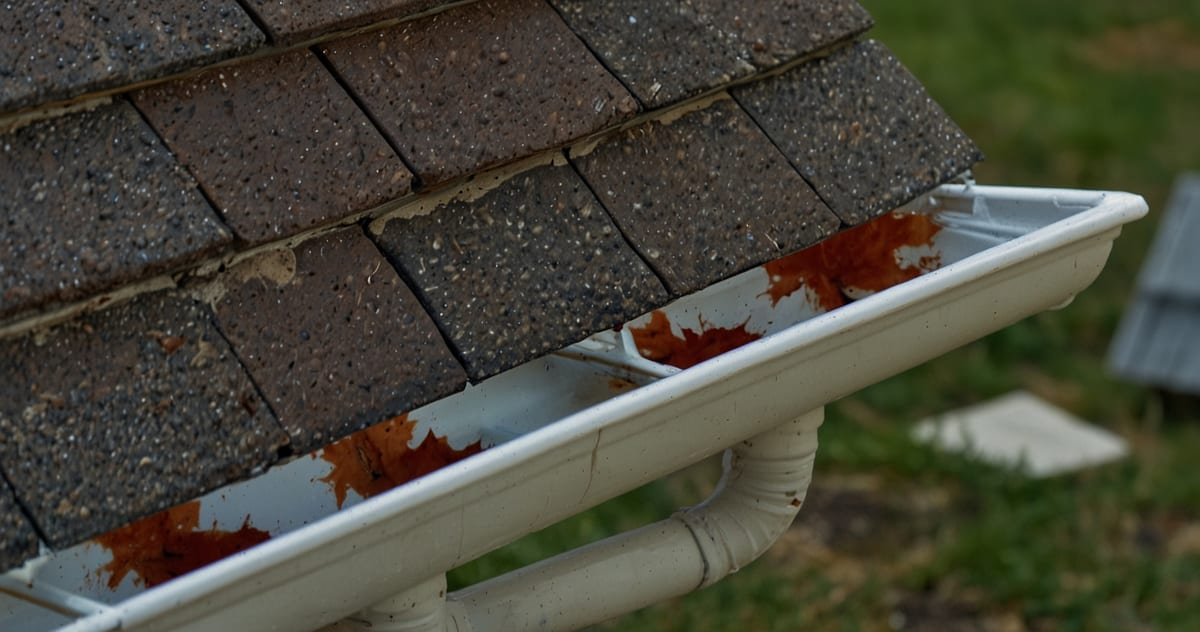
You noticed water sheeting over the edge of your gutters in the last big rain, or you see paint peeling on the board behind them. Maybe a home inspector flagged the gutters and you are not sure whether that is a small fix or a real problem. The honest answer depends on a few things you can check yourself, and a few you can’t.
Quick answer: For most Houston homes, gutter replacement means moving from builder-grade 5-inch gutters to a 6-inch K-style system with 3×4 downspouts, which handles our rainfall far better. But not every overflowing gutter needs replacing. A clog, a loose hanger, or a bad slope is often a repair, and the rot behind clogged gutters can damage your roof edge in ways a roof-only claim won’t cover.
Why 5-inch gutters overflow in a Houston downpour
Houston gets more rain, and harder rain, than the gutters on most homes were sized for. When rain falls faster than the gutter can carry it away, the water runs over the front lip or behind the gutter instead of down the downspout.
Houston averages roughly 49 to 53 inches of rain a year, well above the U.S. average of about 38 inches, according to BestPlaces. The yearly total is only part of it. Our summer thunderstorms dump a lot of water in a short window, and a gutter is sized for how fast water arrives, not how much falls over a year.
A standard 5-inch K-style gutter (the common gutter profile shaped a little like crown molding) is rated for a certain drainage area at one inch of rain per hour. When a Houston storm pushes well past that rate, a 5-inch gutter that is perfectly clean still overflows, because the water is simply arriving faster than the channel and downspouts can move it. That is a sizing problem, not a cleaning problem.
Many Houston homes were built with 5-inch gutters that met code at the time but are undersized for how our storms actually behave. For this area and the Gulf Coast, the common residential recommendation is a 6-inch K-style gutter paired with larger 3×4 downspouts. The 6-inch channel holds more water and the 3×4 downspout, versus the smaller 2×3, drains it faster, so the system keeps up during the heavy part of a storm instead of spilling over.
Where overflow water goes, and what it does to your roof
When a gutter overflows, the water does not just splash on the ground. A lot of it runs behind the gutter and down the fascia, the flat board along the roof edge that the gutters hang on. That is where the damage starts, and it looks like a roof problem long before anyone blames the gutters.
Here is the order it usually happens in. Water backs up behind the drip edge, the metal strip at the roof’s edge that is supposed to send water into the gutter, then soaks into the fascia board and the soffit, the underside panel that closes off the eave. GAF, the roofing manufacturer, describes this directly: clogged gutters let water back up and saturate the fascia and soffit, and that trapped moisture rots the wood. Once the fascia is soft, the rot can spread inward to the roof decking, the plywood or board layer under your shingles, and the rafter ends, and from there you eventually get a stain on the ceiling inside, as Trinity Inspections notes in its write-up on clogged gutters.
That chain is the reason a roofer looks at gutters differently than a gutter-only company does. The gutter is bolted to the same wood that holds your roof edge together. When we inspect a Houston home, a sagging gutter and peeling fascia paint tell us to check the decking and rafter tails too, because by the time water shows up inside, the problem has usually been working on the wood for a while. That full look is part of what our residential roofing work covers.
Is fascia rot from clogged gutters covered by insurance?
Usually not, and this catches people off guard. Storm-damaged fascia, where wind or a falling limb breaks the board, is a different thing than fascia that slowly rotted because the gutters stayed clogged. Fascia rot from long-term water is often treated as maintenance, so ask your insurer.
This matters even when you have a legitimate storm claim. If an adjuster finds that the fascia and part of the decking rotted from years of overflow, the insurer can decline that portion as maintenance while covering the actual storm damage to the shingles. That leaves the fascia and partial decking repair as money out of your own pocket. We can inspect the damage, document what we find, and help you understand the roofing part of the claim, but your insurance company makes the final coverage decision, and keeping gutters clear is the part that stays on you.
Where the downspouts should send the water
Getting water into the gutter is half the job. The other half is getting it far enough away from the house. Houston sits on clay-heavy soil that drains slowly, so water that pours out of a downspout right at the foundation tends to pool there instead of soaking away.
A common rule of thumb is to discharge water at least several feet out from the foundation, using an extension or a buried drain line that carries it past the planting beds. The exact distance depends on how your lot grades, but the principle holds: a 6-inch gutter that catches all the rain and then dumps it at the base of the wall has only moved the problem from the roof edge to the slab. During a long Houston rain, that pooling is what works on your foundation over time. When you replace or repair gutters, the downspout discharge deserves as much thought as the gutter size.
When gutters need replacing, and when a repair is enough
Not every gutter problem is a replacement. Plenty of overflow comes from a clog, a downspout that came loose, a hanger that let the gutter sag out of pitch, or a seam that started leaking. Those are repairs, and a good contractor will tell you so instead of quoting a whole new system.
Here is how to tell which side you are on.
Repair is usually the call when the gutters are the right size, the fascia is still solid, and the trouble is localized: one sagging run, a clogged downspout, a leaking joint, or pulling away in one spot.
Gutter replacement starts to make sense when the gutters are undersized 5-inch for a home that keeps overflowing in storms, when the fascia behind them has already rotted and has to come off, or when the gutters are old enough that seams and hangers are failing in several places at once. Replacing an undersized system with 6-inch gutters is the step that actually fixes the overflow, because no amount of cleaning makes a 5-inch channel carry water it was never sized to carry.
The decision often comes down to the wood behind the gutter. If the fascia is sound, you are usually repairing. If the fascia has to be replaced, it almost always makes sense to put up new, correctly sized gutters at the same time rather than rehang old ones on new board. That is why fascia replacement and gutter replacement so often go together on the same visit.
What you can check from the ground
You can learn a lot without going near a ladder, and you should never get on the roof or a ladder to check gutters. During a steady rain, stand back and watch where the water goes. Water sheeting over the front edge points to a capacity or clog problem. Water running down the wall behind the gutter points to the gutter pulling away from the fascia or the drip edge sending water the wrong way.
When it is dry, look up at the board behind the gutters from the yard. Peeling or bubbling paint, dark streaks, or a soft, wavy look to the fascia all suggest water has been getting back there. Check whether the gutters sag anywhere or sit unevenly, and look at where the downspouts let out: if they empty right against the foundation, that is worth fixing regardless of gutter size.
What gutter replacement costs in Houston, and what moves the price
Nobody can quote your gutters off a web page, because the price turns on your home. What moves the number is the total length of the gutter run, the material, whether the gutters run in one continuous piece or in joined sections, the number of stories, the number of downspouts and drain extensions, and whether rotted fascia has to be replaced first.
A two-story home means higher, harder work and sometimes more downspouts. Gutter guards add cost up front, and in Houston’s heavy oak-leaf, pine-needle, and shingle-granule debris, no guard is truly no-maintenance. The only way to get a real figure for a gutter replacement is to have someone look at the actual roof edge and measure it. Mars gives a figure after a free inspection and provides a written estimate for the work.
FAQ about gutter replacement in Houston
Do I need 6-inch gutters, or will 5-inch work in Houston?
Six-inch K-style gutters with 3×4 downspouts are the common recommendation for Houston because our storms drop rain faster than 5-inch gutters can carry away. Five-inch gutters can be fine on a small, simple roof with short runs, but on a typical home they tend to overflow in a hard rain even when clean. A contractor can tell you which fits your roof after measuring the runs and roof area.
When is gutter replacement worth it instead of a repair?
Gutter replacement is worth it when the gutters are undersized for how your home sheds water, when the fascia behind them has rotted and has to come off, or when seams and hangers are failing in several places at once. A clog, a loose downspout, or one sagging run is usually a repair. If the fascia is sound, you are almost always repairing rather than replacing.
Will my homeowners insurance pay to fix fascia that rotted behind my gutters?
Usually no. Fascia rot from long-term water is often treated as maintenance, so ask your insurer. Fascia broken by a storm or a falling limb is a different situation and may be covered. Your insurer makes the final call, so keeping gutters clear is the part that protects you from paying for that repair yourself.
How far should my downspouts drain from the house?
Far enough that water does not pool against the foundation, which usually means several feet out using an extension or a buried line. Houston’s clay soil drains slowly, so a downspout that empties right at the slab lets water collect there during long rains. Moving the discharge away from the wall is often a cheap fix that does real good.
Can clogged gutters actually cause a roof leak?
Yes, over time. When gutters stay clogged, water backs up behind the drip edge and soaks the fascia and soffit. That rot can spread into the roof decking and rafter ends, and eventually show up as a ceiling stain inside. It looks like a roof leak, but the cause is at the gutter, which is why a roofer checks both.
If your gutters are spilling over, the paint behind them is peeling, or an inspection flagged the roof edge, the next step is a close look by someone who checks the whole system, gutters and the wood they hang on. Request a Free Inspection and Mars Roofing will inspect your roof, explain what we find, and discuss your options with no obligation. If you have water coming inside right now, call 281-494-7663.