
Water Stain on Ceiling: Roof Leak, AC, or Plumbing?
Water stain on ceiling? Learn what causes roof leaks, AC condensate, and plumbing leaks in Houston homes, how to tell them apart, and when to call for help.
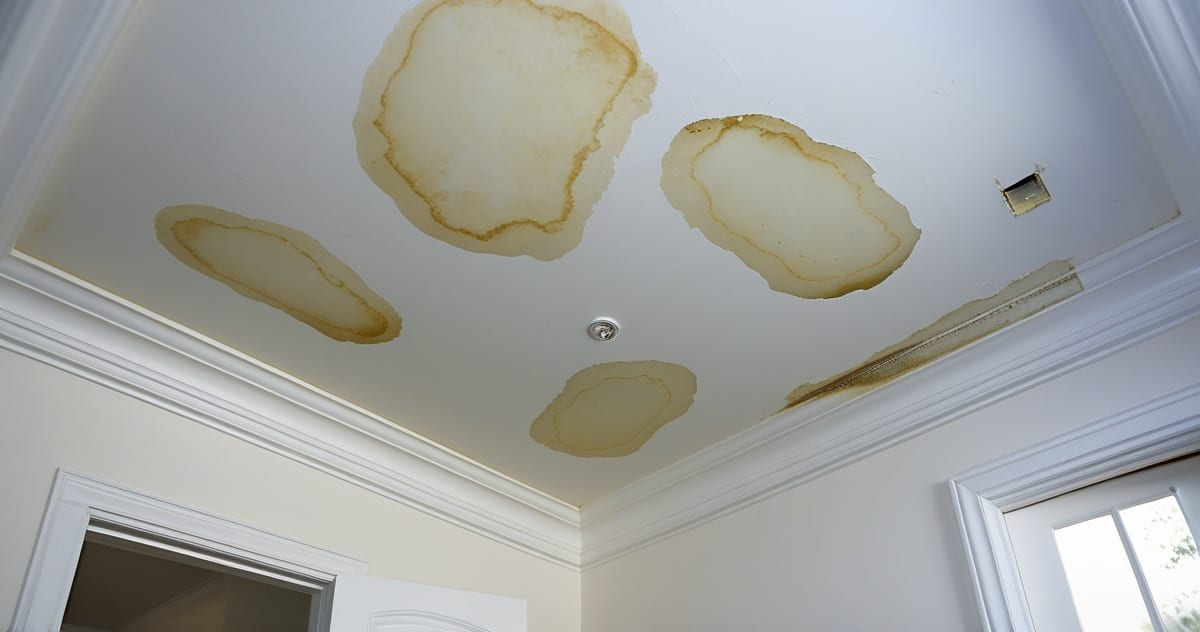
You see a brown ring on the ceiling and your first thought is the roof. Sometimes it is. But in Houston, a ceiling stain is just as likely to come from a clogged air conditioner drain or an attic that sweats in the humidity. Before you spend money or worry, you can narrow it down yourself without ever getting on the roof.
Quick answer: A water stain on the ceiling can mean a roof leak, but it can also come from a clogged AC condensate drain, a plumbing leak, or attic condensation. In Houston, the fastest way to tell what is staining your ceiling is to check whether the stain grows after rain (roof), when fixtures run (plumbing), or on hot dry days when the AC runs hardest (condensate), then look in the attic for wet insulation or dark trails on the underside of the roof.
What a brown spot on the ceiling is actually telling you
A brown spot on the ceiling means water has been sitting somewhere above the drywall long enough to leave a mineral and dirt ring behind. The stain tells you water is getting in. It does not tell you where from, and it rarely sits right under the source.
Water runs downhill along the nearest surface before it drips. According to Servpro, water travels along roof rafters or ceiling joists and comes out at a low point that can be several feet away from where it actually entered. So a stain near the middle of your living room ceiling might start at a vent pipe near the far wall. Keep that in mind before you decide the hole is right above the mark.
The color and feel of the stain tell you something too. A small ring that is dry to the touch and has not changed since the last rain is less urgent than a spot that is soft, sagging, or spreading with each storm. ACS Roofing notes that even a dry stain can hide wet insulation and mold in the cavity above, so "it stopped growing" does not mean "it’s fine." It means you have time to figure it out.
Roof leak, plumbing, or AC? How to tell them apart
The single most useful clue is timing: when does the stain appear or grow. A roof leak follows the weather. A plumbing leak follows your faucets and drains. An AC condensate problem follows the heat. In Houston, all three are common, and the condensate one catches people off guard because it shows up when it has not rained in weeks.
Here is how the three line up before you call anyone.
| What you notice | Most likely source | What to check next |
|---|---|---|
| Stain appears or grows during or right after rain, on a top-floor ceiling under the attic | Roof | Look in the attic after the next rain for wet decking or insulation |
| Stain grows when you run a shower, sink, tub, or washer, rain or shine | Plumbing above the ceiling | Note which fixture is above or near the stain |
| Stain grows on hot, dry days when the AC runs hardest; no rain involved | AC condensate drain or sweating duct | Find the attic air handler and its drain pan |
A stain that shows up or spreads during rain, on a top-floor ceiling directly below the attic, is a strong sign the source is the roof rather than plumbing or HVAC, per Weathershield Roofers. If the ceiling is directly below a bathroom, kitchen, or laundry room and the stain grows when those fixtures run instead of when it rains, ACS Roofing points to plumbing as the likely cause.
The Houston wildcard is the air conditioner. Hugo Plumbing calls a clogged AC condensate drain line one of the most common summer causes of a ceiling stain in this area. It appears in hot, dry weather with no rain, and it grows on the days your AC works hardest. There is a simple home test they suggest: shut the AC off for a few hours. If the dripping or growth stops, the source is condensate.
What you can safely check in the attic
You can learn most of what you need from inside your attic, standing on the floor joists with a flashlight. Do not get on the roof. The attic tells you whether water is coming from above, from a pipe, or from the AC, and you can see it all from inside.
Go up when it is safe to move around, ideally after a rain if you suspect the roof. Walk only on the joists or on solid decking. The insulation between them will not hold your weight. Then look for a few specific things.
Signs the roof is the source
In the attic, the signs of a roof leak are wet or discolored insulation, water stains or dark trails running down the underside of the roof decking (the wood sheathing under your shingles), rusty nail heads poking through, and daylight visible through gaps around roof penetrations, according to ACS Roofing. Trace any dark trail uphill with your flashlight. It usually leads to a penetration: a vent pipe, the chimney, or a valley where two roof planes meet.
Roof leaks on Houston shingle roofs most often begin at flashing points around vent pipes, chimneys, and roof valleys, rather than out in the open field of shingles, per Leak Detection Houston. Flashing is the metal or rubber that seals those joints. The most common single culprit here is the pipe boot: the rubber collar around a plumbing vent pipe that pokes through the roof. Bustamante Roofing names failed pipe boots as a leading roof-leak cause in Houston, because years of UV and heat cycles crack the rubber. From the attic, a boot leak shows as a wet trail running down the vent pipe where it exits the decking.
Signs of an AC or plumbing leak
Find the air handler if your furnace or AC lives in the attic, which is common in Houston homes. Look at the condensate pan under it and the drain line leading away. A clogged drain line backs up and overflows the pan. When a condensate pan overflows, it saturates attic insulation and ceiling drywall, and by the time a stain shows the cavity may have been wet for weeks.
Also feel the AC ductwork. Alief Heating and Air Conditioning explains that ducts in an unconditioned Houston attic can sweat heavily in summer, dripping enough condensation onto insulation and drywall to look like an active plumbing leak. If the insulation is wet directly under a duct or the air handler and bone dry up near the roof decking, the water is coming from below the roof decking, and the roof itself is likely fine.
To test a suspected supply pipe, turn off every faucet, shower, and appliance that uses water, then read your water meter and check it again an hour or two later. If the numbers moved while nothing was running, water is escaping somewhere in the lines, and a plumber is the right first call. A drain leak only shows up when a fixture drains, so run the shower or tub above the stain for a few minutes and check the ceiling and the attic right after.
Attic condensation itself can stain a ceiling with no leak at all. Bustamante Roofing points out that Houston’s steady high humidity, combined with poor attic ventilation, lets moisture condense on cold surfaces and drip. If the whole attic feels damp and the moisture is spread out rather than tracing to one spot, poor ventilation is the likely cause.
What you can see from the ground, and what you can’t
From the ground you can rule a few things in or out, but you cannot confirm a roof leak from the driveway. Grab binoculars and walk the perimeter of the house. You are looking for obvious trouble near the penetrations.
From the ground you can often spot a missing or lifted shingle, a vent pipe standing at an odd angle, a cracked or slipped pipe boot if it is near the eave, debris piled in a valley, or a sagging gutter dumping water against the wall. Any of those near the stain’s location is worth noting. What you cannot see from the ground is the condition of flashing up high, the state of the decking, or a small boot crack on the back slope. Those need someone on the roof who knows what a failing seal looks like.
This is the honest limit of a do-it-yourself check: it tells you which kind of help to call, and the final diagnosis takes someone on the roof. If your attic shows wet decking and your binoculars show a cracked pipe boot over the stain, you have a roof repair, often a small one. A failed pipe boot is usually a targeted fix, and the rest of the roof can stay. When the roof is genuinely the source, Mars Roofing can inspect it, find the entry point, and tell you whether a repair or a replacement makes sense. Not every leak needs a new roof, and we will say so when a repair is the right call.
Common mistakes that cost Houston homeowners money
The most expensive mistake is painting over the stain before fixing what caused it. Roof It Forward is blunt about this: bleaching or painting a ceiling stain without resolving the source will not keep it from coming back. You spend on paint, the stain returns, and the cavity above keeps getting wet.
A few other traps come up often here:
- Assuming rain means roof. In a Houston summer the AC runs harder than the sky rains. A stain that grows during a dry week is almost always condensate.
- Calling a roofer for a plumbing or AC issue. If the stain tracks with your shower or your thermostat, a roofer is the wrong first call. The attic test tells you which trade to phone.
- Waiting out a sagging ceiling. A dry ring can wait a few weeks. A soft, bulging, or dripping ceiling holds standing water and can let go. If it is sagging, keep people out from under it and get it looked at quickly.
- Looking for the hole directly above the stain. Remember water travels along the framing first. The entry point is usually uphill of the drip, sometimes far uphill.
FAQ
Does a brown spot on the ceiling always mean I need a new roof?
A brown spot on the ceiling does not mean you need a new roof. Many ceiling stains come from a clogged AC drain, a plumbing leak, or attic condensation, which are not roof problems at all. Even when the roof is the source, the fix is often a small repair at a flashing point or a cracked pipe boot rather than a full replacement.
Why is my ceiling stain not directly under a hole in the roof?
Your ceiling stain is not under the hole because water runs along the roof rafters or ceiling joists before it drips out at a low point. Servpro notes that drip can land several feet from where the water actually entered. That is why finding the source usually means tracing wet trails uphill in the attic rather than looking straight up from the stain.
How do I tell a roof leak from an AC condensate leak in Houston?
You tell them apart by timing and by shutting the AC off. A roof leak grows during or after rain. A condensate leak grows on hot dry days when the AC runs hardest. Hugo Plumbing suggests turning the AC off for a few hours. If the dripping stops, the cause is the condensate drain.
Is a dry ceiling stain urgent?
A dry, stable ceiling stain is not an emergency, but it is not nothing either. ACS Roofing warns that even a dry stain can hide wet insulation and mold in the cavity above, so the source still needs to be found and fixed. A soft, sagging, or growing stain is the one to act on quickly.
Can I check my roof myself for the leak?
You can check a lot from your attic and from the ground, but you should not climb on the roof. From the attic you can find wet decking, dark trails, and a leaking pipe boot. From the ground with binoculars you can spot missing shingles or a tilted vent. Confirming flashing and decking condition up high is a job for someone already trained to be on a roof.
If your attic and your binoculars point to the roof, the next step is a close inspection by someone who does this every day. Request an inspection and we will examine the roof, explain what we find, and discuss your options with no obligation.